 pyomn
pyomn

Did you know that potted plants help purify the air in our homes? We have long known that indoor plants improve our mood and reduce stress levels, but improving air quality is an added benefit! See the best air-purifying potted plants.
During the colder months, we spent a lot of time indoors. Of course, healthy indoor air is a top priority. Without proper ventilation, it does not take long for indoor pollutants to build up to unhealthy levels.
Indoor pollutants are available in two main variants:
- Particles such as dust, mold spores and pollen.
- Labile organic mixtures (VOCs). VOCs are gases that are released from paints, fabrics, wallpaper, carpets, plastics and solvents that are commonly found in most homes. Even household chemicals such as bleach, ammonia, detergents, furniture polishes, carpet cleaners and grinding balls emit harmful gases.
Mechanical or electrostatic filters can be effective in capturing particles, but if we do not remove the source, airborne chemicals are difficult to eliminate completely.
What do plants have to do with indoor air?
Let’s examine a basic piece of botany: plants absorb carbon dioxide (Co2) and release oxygen (O2), used by all humans and living beings to breathe. Outdoors, tree planting uses that concept to compensate for the effects of air pollution. So, would indoor plants do the same thing with indoor air?
As early as 1989, a NASA The Clean Air Study tested 19 different species of plants to see if they would be effective in purifying the air. They found that in just 24 hours, up to 87% of the formaldehyde, benzene and trichlorethylene were removed from the air of the plants’ leaves and roots, while oxygen was returned to the room. Summa summarum: ordinary houseplants with dim light absorbed toxins and helped to clean the air!
… Or so we thought. A study from 2019 by the Journal of Exposure Science & Environmental epidemiology concluded that the effect of indoor plants on indoor VOC the levels have been a bit exaggerated. While purifying the air, they do so at such a slow pace that it does not make a major impact in the end.
We say: Every little bit helps! And honestly, it’s not surprising that some houseplants purify the air.
10 indoor plants that purify the air
Some of the best air purifying houseplants are:
1. Spider plants (Chlorophytum comosum) are powerful air purifiers that can remove formaldehyde, a gas emitted by cigarette smoke, dry cleaning, synthetic carpets, nail polish and more. Spider plants also remove carbon monoxide that you can find in rooms with fireplaces or have stoves. Fortunately, spider plants are very easy to grow and maintain. Just keep moist in a semi-sunny to shady place and it will thrive.
 Spider plants
2. Philodendron, one of the most popular houseplants, is also an excellent air purifier and removes formaldehyde gases from the air. In addition, they are practically bulletproof plants with fast-growing succeeding vines and beautiful heart-shaped leaves. They can take full sun to shade if they are watered regularly. Heartbeat, Philodendron celloumand elephant ear philodendron are the best air purifiers.

Philodendron
3. English ivy (Hedera helix) is also a popular, hardy plant that is easy to grow. It removes most contaminants. It is not careful with light and can survive sun to shade. Ivy does not like high temperatures and prefers to stay cool. Keep moist and spray the leaves every week to counteract spider mites.
 English ivy
4. The Fred Lily (Spathiphyllum sp.) is one beautiful plant with a lovely white flower that thrives well in average indoor temperatures. Peace lilies are known to purify the air of alcohols, acetone, trichlorethylene, benzene and formaldehyde. Keep moist in a semi-shady place.

Peace lily flower
5. Motley Snake plant (Sansevieria trivasciata), also called “Mother-in-law’s tongue”, is very easy to grow. Water vigorously and then allow to dry before watering again. It can survive anywhere from sun to shade.

Snake plant (this 35-year-old mother-in-law’s tongue actually came from a mother-in-law).
6. Bromeliads win a gold star to clean up most of the pollution. They release oxygen and remove air pollutants at night while you sleep! These beautiful plants with their bright flowers and green foliage do best with strong, indirect sunlight or fluorescent lighting in the office. This drought-resistant plant does not need much maintenance, but will get root rot if you overwater or do not provide good drainage.

Bromeliad
7. Dracaena likes to be kept moist in a semi-sunny to shady position. Warneck, Janet Craig, red-edged dracaenos and corn stalks have been ranked highest when it comes to removing air pollutants.
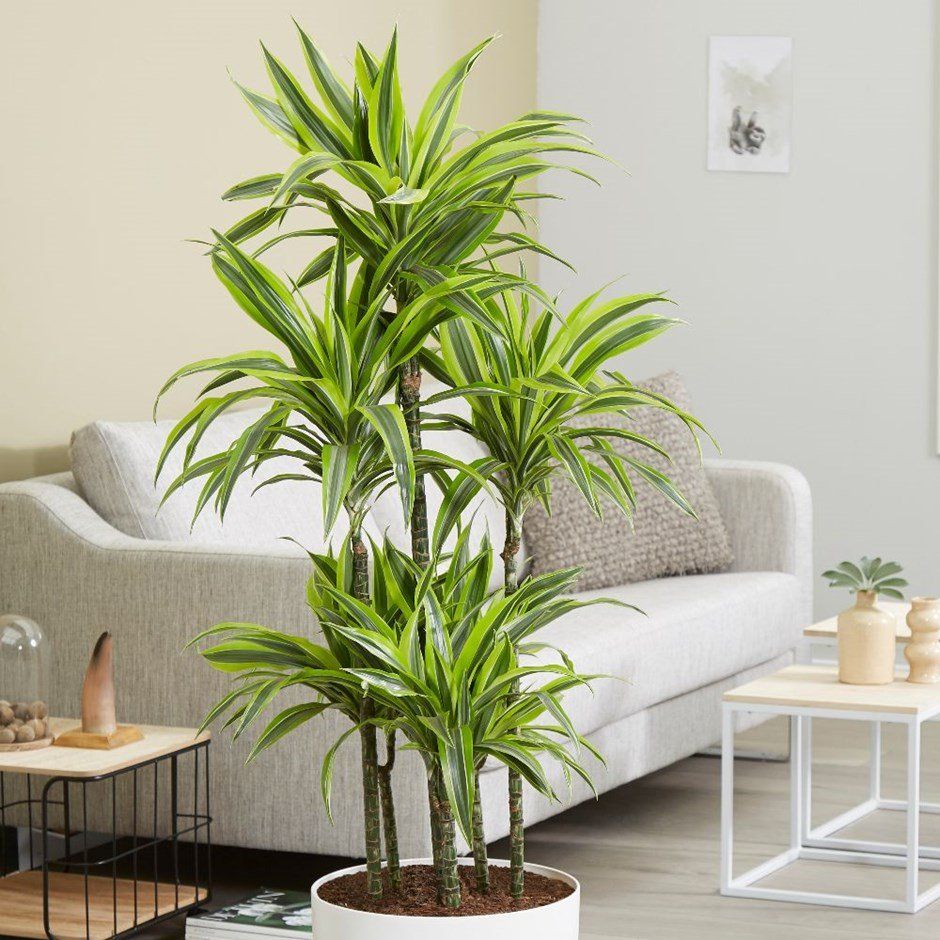
8. Crying fig (Ficus benjamina) likes strong indirect light, high humidity and warm temperatures. Water when the top of the soil feels dry and mist the top regularly.

9. Rubber plants (Ficus elastica) tolerate low light and cool temperatures and remove air toxins from all indoor environments.

10. Areca palmer (Chrysalidocarpus lutescens) are beautiful, light plants that remove everything indoor air toxins.

More plants that purify the air
- If you prefer flowering plants, there were two that did well in the test Chrysanthemum and Gerbera daisies. They are effective at removing VOCs and produced flowers too!
- Chinese evergreen plants (Aglaonema) as warm temperatures and medium to low light conditions. Let it dry a little between waterings. Stay away from drafts, which can cause the leaves to turn brown.
- Sharp or Bamboo palms thrive in low light as long as they are kept evenly moist.
- Other large air-purifying houseplants include Boston ferns, aloe veraand the bird of paradise.
No need to turn your home into a jungle, though: In a house with 8 to 9 feet high ceilings, just one or two plants per 100 square feet of floor space is beneficial. The roots and microorganisms in the soil play an equally important role as the leaves, so plants should stand in 6 to 8 inch wide pots with the ground surface exposed to the air. Absorbing toxins does not seem to have any negative effect on the plants studied. Research shows that they safely metabolize the compounds by breaking them down into harmless carbon, water and salts.
We clean our homes from dirt, so why not clean the air – especially if it’s as simple as adding a few more houseplants.
See our potted plant care guide on how to keep your potted plants happy and healthy – so that they in turn can keep your air healthier!